
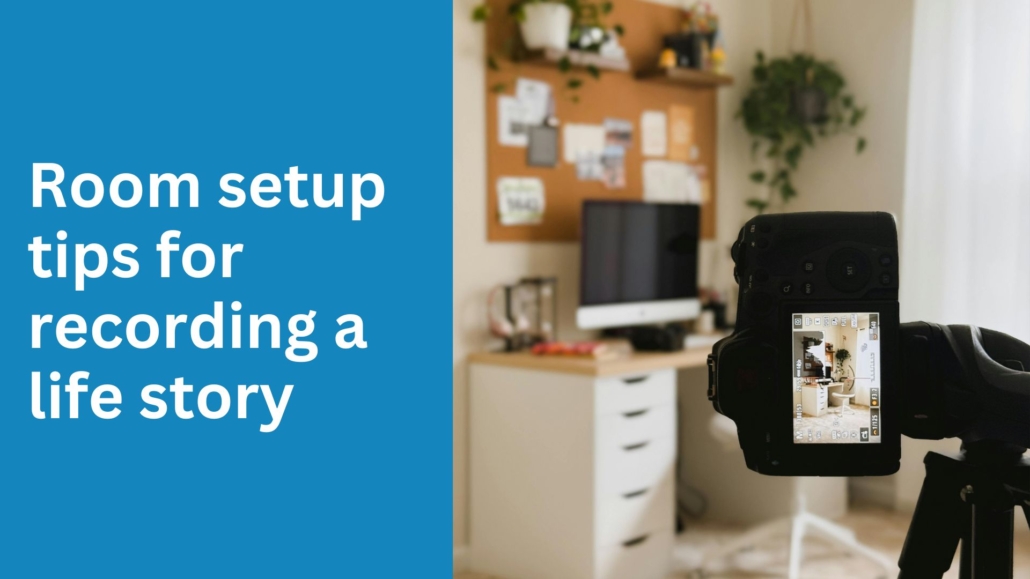
Room setup tips for recording a life story
Creating a professional and comfortable setting for your life story video doesn’t require expensive equipment or a fancy film studio. With a bit of planning and creativity, you can transform any space into an ideal filming location.
This blog post will guide you step-by-step through setting up a room to ensure your video looks and sounds its best.
Note: This content is taken directly from Chapter 4 of my How to Film a Life Story e-book and guide.
Choosing the right space
The first step is selecting the right space. Here are some things to consider:
- Quiet environment: Choose a location free from background noise such as traffic, pets (unless they are to be included) or household appliances. Remember to turn off phones and air conditioning while recording too.
- Good natural lighting: Look for a space with good natural light or the potential for controlled lighting. Avoid rooms with harsh overhead lights or direct sunlight that can create unflattering shadows.
- Comfort: Select a setting where the storyteller feels relaxed. Familiar surroundings, such as their living room or a favourite chair, can help create a natural and intimate atmosphere.
Lighting tips and tricks
Lighting is one of the most important elements of video production.
- The best time of day for a nice natural light tends to be mid to late morning, and mid-afternoon. Midday can be too bright, especially in summer, so avoid that if possible. If outdoors, avoid direct sunlight on your face and be careful of shadows over the face too.
- Do NOT face the camera lens towards a window – this will cause backlight issues.
- Artificial lighting can be used if needed, such as a ring light or soft LED light, to light your face. Position these lights at a 45-degree angle from your face to create soft and flattering shadows. Check out YouTube lighting tutorials for some good examples (search for “best video lighting tutorial”).
- If the light is too strong, use sheer curtains, lampshades or a DIY diffuser (such as a white sheet) to soften it.
- The best way to check the lighting is to test it. Set up your camera and test the lighting before filming. Adjust the angles and intensity as needed to remove shadows or uneven lighting.
Sound quality tips
Clear audio is just as important as good visuals. Here’s how to ensure the storyteller’s voice comes through clearly:
- Reduce background noise: Close windows, turn off fans and ask any others in the household to stay quiet during filming. If you have young children in the house, it’s a good idea to have someone take them out for a few hours to avoid interruptions.
- Use a microphone: If possible, use an external microphone for better sound quality. Clip-on lapel microphones are affordable and easy to use. Position the microphone on their chest, just below their collarbone. Alternatively, you could use a shotgun microphone if using a DSLR camera. These are affordable and easily attached to the camera.
- Test the acoustics: Clap your hands to check for echoes. If the room feels too echoey, you may need to move to a carpeted room. You can also add soft furnishings like cushions or rugs to absorb sound. AI editing tools can help reduce echoes, but avoiding echoes at the filming stage is the best option.
- Do a sound check: Record a short test clip and listen carefully for any background noise or audio issues. Adjust as needed. There are AI tools available that can help reduce background noise in the editing stage, so if you find it difficult to reduce the noises in the environment you can try that in the editing stage.
For a full step by step process, including the above tip and everything else you need to know to record a life story for yourself or a loved one please see How to Film a Life Story ebook and guide.
How to Film a Life Story – the complete guide!
If you’d like learn step by step how to plan, interview, record and edit your loved one’s life story with video, I recommend my DIY guide (with bonus video masterclass that takes you through the ebook and includes video editing demos). The guide is filled with tips and tricks, and is aimed at beginner level. It contains all you need to get started.
Buy the How to Film a Life Story guide via the link below for $37 NZD:
https://www.movingmemories.nz/downloads/how-to-film-your-life-story-e-book/
Review from a recent purchaser:
“Love the e-book and Masterclass. Beautifully delivered, great pace to understand, incredibly thorough, detailed and well thought out. This ebook and masterclass reignited my passion for collecting life stories and gave me the confidence to do it on my own. It is everything you will need complete your project from start to finish. Great introduction and really allows you to realise the true need to record these videos.
Thank you so much for making the process far simpler by setting out the pathway for others to follow and create a keepsake to cherish for generations to come.
The video is wonderful in giving you all the content in a very easy to digest format. It takes you through the chapters at a comfortable speed with many tips and hints to help you along the way. It’s like she is in the room with you talking you through every step!
Brilliant balance of professional tips alongside the more softer empathetic skills to use when working with people.
Lovely demo for editing the video too, which I have found the hardest part with my project.”
– Hina, UK
Resources & Links
⚒️The DIY Ebook: How to Film a Life Story:
Buy the DIY step-by-step How to Film a Life Story ebook for just $37 NZD and get started on your life story project today! Includes practical exercises plus BONUS masterclass video.
https://www.movingmemories.nz/downloads/how-to-film-your-life-story-e-book/
Free list of 30 life story interview questions:
https://www.movingmemories.nz/30-life-story-questions/
10 Tips for Video Confidence (Free E-book)
https://www.movingmemories.nz/top-10-tips-for-video-confidence/
YouTube channel – Saving Family Memories:
https://www.youtube.com/@savingfamilymemories
Get in touch
Send me an email or visit www.movingmemories to learn more about capturing the stories and memories of your loved ones before it’s too late.